Carbon/Graphene Analog
Carbon/Graphene Analog

Flexible Carbon / Graphene Analog Interconnects
Flexible Carbon / Graphene Analog Interconnects
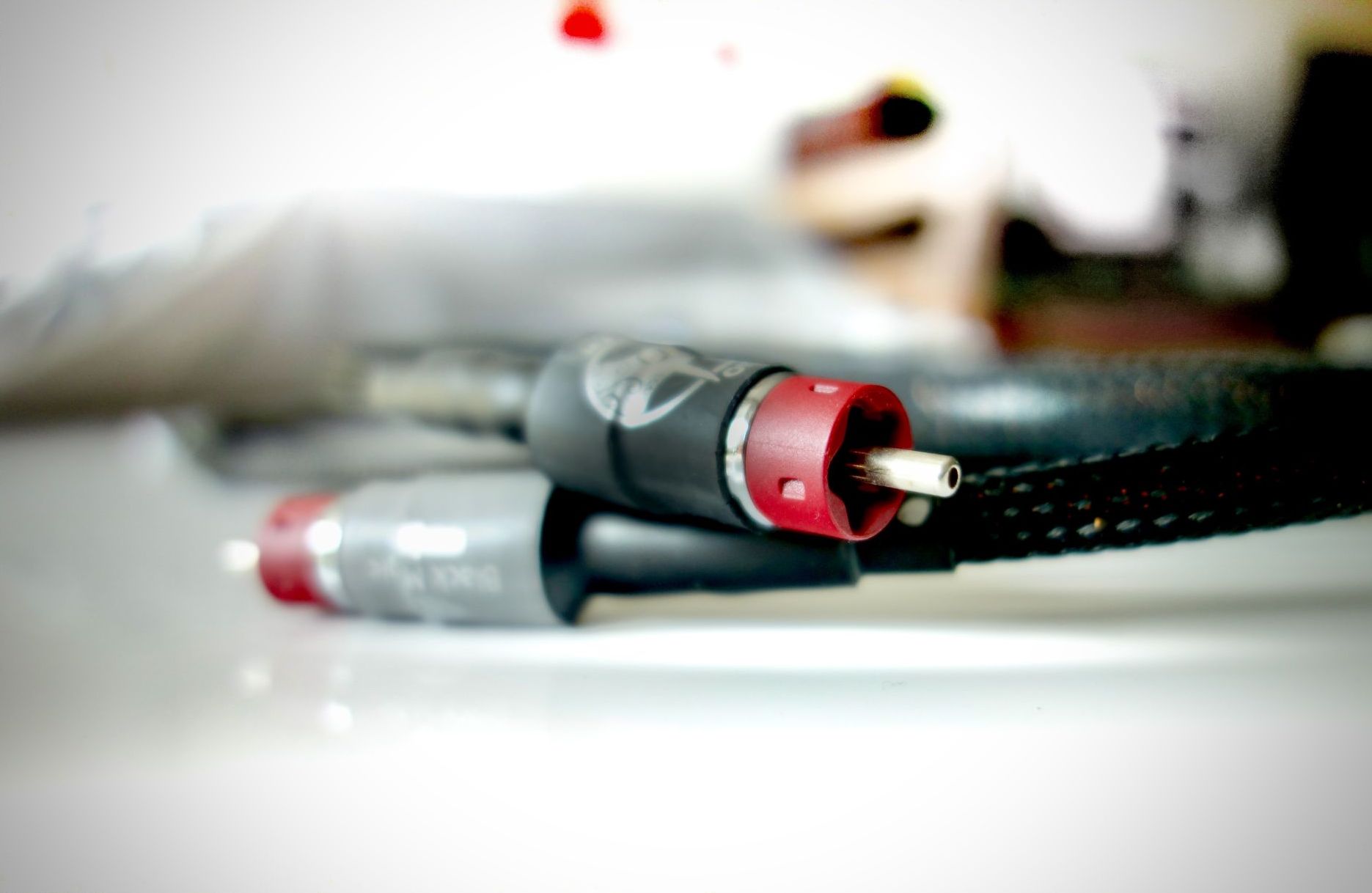
Mad Scientist Flexible Carbon/Graphene Interconnects are a completely new development, unrelated to the HAC and HAC+, using a new flexible carbon fiber and a host of new construction techniques.
We are offering two models of interconnect:
1) Flexible Carbon/Graphene (FCG) – this one uses the new flexible fiber along with new construction techniques designed to cancel RF interference. Graphene is used at the metal/carbon junctions. This interconnect supersedes and replaces our HAC+ model.
2) Flexible Carbon/Graphene PLUS (FCG+) – same construction as above but this one uses graphene treatment along the whole length. This is our best interconnect.
Needless to say but the graphene treated version sounds a lot better. However, the non-graphene version is no slouch, easily outperforming the HAC+.
Our new Flexible Carbon/Graphene Interconnects have a powerful yet natural sound from top to bottom, and sit at the top of our range. We also have the entry-level Heretical Cables. All interconnects use Carbon Fiber and Graphene in their construction (except the USB cable). And as with all our products, they are hand-made in New Zealand.
Check out this new FCG+ review in HiFi Advice :
Check out this new FCG+ review in HiFi Advice :
“Richly saturated tonally, powerful and sonorous in the bass, full and creamy in the midrange and artfully refined and airy in the treble, with an overall lush yet energetic performance, no matter how I used it, this is a supremely satisfying and musical cable. Superbly synergistic with the Lukaschek, my samples sure are not leaving the analog setup anymore. Quite simply the FCG+, and I assume the more basic models just as much, are a must-hear, and with a 30-day money-back guarantee that is a risk-free adventure.”

Risk-Free Trial
Risk-Free Trial
And like all our products, these interconnects are hand made in New Zealand from the ground up, and come with 30-day money-back guarantee. There are 19 different ‘ingredients’ that go into the construction of the FCG+, and that is not including the labour, soap and water (the graphene part is messy..)
Using carbon fibers as the signal conductor has some beneficial effects:
Using carbon fibers as the signal conductor has some beneficial effects:
Resistance: these cables have around 20 ohms of resistance. In the digital version, this resistance helps remove the reflections that occur. A reflection that bounces off the DAC’s input socket will travel the length of the cable and back again, thus experiencing around 75 ohms of resistance. But in an analog cable, such reflections are not important. Or are they? The normal answer is no – the frequencies involved are not high enough. But I’m not so sure anymore. It’s possible that you have RF interference and noise at the kind of frequencies that do matter, and it seems likely that they could reflect up and down the wire. Something must account for why these cables sound so much better.
But surely you want to have ultra low resistance for an interconnect? If you read and believe the marketing that goes with many silver cables, you’d think that low resistance was an essential part of a good interconnect. Sorry but it’s not. Just about every device used to send audio down an interconnect has an output impedance of several hundred ohms. This means that it’s effectively an ideal source with a resistor in line. Often that is how it is implemented. I’m not saying that silver wire can’t sound good – it can – but I doubt that low resistance is the key to this. (In fact, due to it’s lower resistance, silver wire has a thinner skin depth than copper wire).
Skin Effect is clearly important for digital cables, as the harmonics of the square waves go up to the 100MHz range and higher. There has been a lot of argument about whether this is important at audio frequencies. Using simple (or maybe simplistic) math shows that skin effect should have negligible impact at audio frequencies. On the other hand, listening critically to various wire thicknesses you get strong correlation between treble performance and wire gauge. The best treble seems to come from wire that is 20awg or thinner. (Note : HAC uses 29awg wire for ground return). But note I said wire. All metals used for wire, e.g. copper, silver, etc., have similar skin depths. But carbon fibers are different – because of their permittivity and resistance, the skin depth is much more, so the fiber or bundle of fibers is much smaller than the skin depth.
But frankly, the reason we use Carbon Fibers for the conductor is because it sounds great, better then any wire I’ve tried.
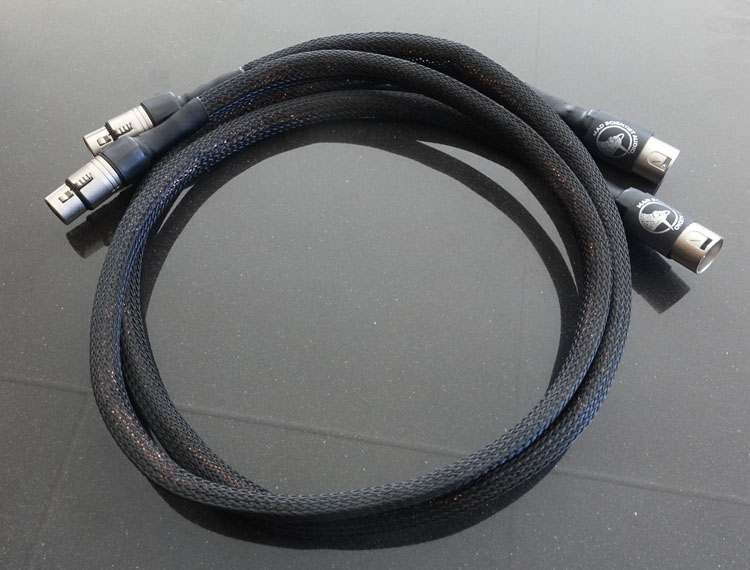
Balanced version with XLR plugs.
Flexible Carbon/Graphene Balanced
Flexible Carbon/Graphene Balanced
Flexible Carbon/Graphene interconnects are also available in a balanced configuration, using Neutrik XLR plugs. Contact us if you prefer other types of XLR plugs, or some other balanced connectors. We can also make ACSS cables for connecting Audio-GD products.
Prices and Options
Prices and Options
Example prices. Visit shop for complete list of lengths and options.
All prices in US$, for stereo pair. Available in black only.